The "Sketchy" Reputation of Supplements
When I told Ethan, my niece’s fiancé (and yes, it still stings knowing I am about to be promoted to the “great uncle” category), that I was planning to start a dietary supplement business, he did not hesitate.
“Supplements? That’s sketchy.”
It caught me off guard. But the more I thought about it, the more I realized he was not wrong. The dietary supplement industry does have a reputation problem, and in many cases, it is earned.
A Tale of Two Standards
After 15 years in the pharmaceutical and dietary supplement industry, I have overseen the development and launch of multiple supplement brands across global markets. That experience has given me a close view of both ends of the spectrum: products built with scientific rigor and disciplined manufacturing, and others that fall far short of what consumers reasonably expect.

In the companies I worked with, supplements were developed with a level of discipline similar to drug development. Every ingredient was tested for identity and potency before use. Manufacturing processes were validated to ensure consistency from batch to batch. Finished products then underwent strict laboratory testing to confirm disintegration, dissolution, and that each capsule contained exactly what the label claimed—no more and no less. In addition, products had to pass testing for heavy metals and microbial contamination to ensure safety.
The Three Pillars of Industry Failure
Unfortunately, not every company applies this level of rigor.
Over the years, I have encountered many products that were, quite frankly, "sketchy." In some cases, they were poorly formulated. In others, they were outright misleading. These issues generally fall into three categories:

- Misleading claims, where benefits are not supported by strong scientific evidence, particularly human clinical trials
- Poor quality control, including incorrect ingredient levels or contamination with heavy metals or microbes
- Fraud, including missing ingredients or undeclared substances that should not be present
What the Research Reveals
My experience is not unique. High-quality scientific journals have reported similar concerns. For example, a 2023 study in the Journal of the American Medical Association found that 83 percent of products tested had inaccurate labels, 80 percent contained listed ingredients that could not be detected, and 23 percent contained undeclared ingredients. Some products even substituted cheaper materials, such as fake saffron.1 A separate 2022 study published in Nature highlighted similar issues, reinforcing that these problems are not isolated incidents but part of a broader industry challenge.2
Taken together, this gap between what is promised and what is actually delivered is at the core of the supplement industry’s reputation problem.
The Case for Supplementation
This raises an important question. If the industry has these issues, should people still consider taking dietary supplements, and if so, how should they choose the right ones?
The answer is yes; supplements can still play a valuable role when used appropriately. Even with a balanced diet, it is not always easy to achieve optimal levels of certain nutrients due to age, lifestyle, dietary restrictions, or environmental factors. When properly designed and manufactured, supplements can help fill these nutritional gaps and support overall health.
Evidence-Based Supplements
In fact, several dietary supplements are included in formal medical guidelines. Examples include:
- Vitamin D for bone health and prevention of deficiency,
- Calcium for osteoporosis prevention,
- Iron for the treatment of iron-deficiency anemia,
- Folic acid for reducing the risk of neural tube defects during pregnancy,
- Vitamin B12 for preventing deficiency in at-risk populations such as older adults and vegans,
- Omega-3 fatty acids for the management of elevated triglycerides in selected patients Iodine for thyroid health and prevention of deficiency,
- Zinc for the treatment of acute diarrhea in children as recommended by the World Health Organization. 3-9
Vitamin D is a particularly important example. In some regions of the world, it is extremely difficult to obtain sufficient vitamin D from sunlight exposure and diet alone. In individuals who are deficient or at high risk of deficiency, supplementation helps restore normal levels and has been shown to support important health outcomes, particularly in bone health. 10,11
Why Brand Name Isn't Enough
So the real question is not whether supplements are useful, but how to choose them wisely.
For most people, the default answer is brand. While brands from major global companies such as Abbott, Pfizer, and Johnson & Johnson can be a reasonable proxy for quality, this assumption does not always hold. Even well known brands can produce complex multivitamin formulations where stability and consistency are difficult to maintain.
The Hidden Complexity of Multivitamins
Many multivitamins contain 25 to 30 ingredients.

The idea of delivering complete nutrition in a single pill is appealing and makes for powerful marketing. However, from a formulation standpoint, maintaining stability across so many ingredients is highly challenging. Even 5 to 10 active vitamins in a single system can be difficult to stabilize over time, and complexity increases further as more ingredients are added.
This is especially relevant because many vitamins, such as vitamin C and vitamin E, are inherently unstable. Their degradation can be accelerated in the presence of metal ions such as iron, zinc, and copper. At the same time, it is not practically feasible to test every single ingredient in a finished product at full resolution. In most cases, laboratories test a subset of key markers and use these as indicators of overall product quality. As a result, product consistency depends heavily on manufacturing discipline and quality systems rather than end-point testing alone.
This is why brand alone is not a sufficient guarantee of quality, consistency, or accuracy.
So again, how should one choose?
Two Essential Principles for Selection
I would offer two simple principles.
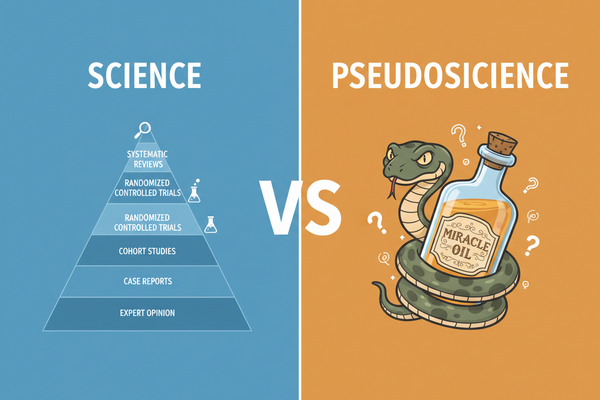
First, choose ingredients and dosages that are supported by human clinical studies, particularly those based on double-blinded randomized placebo-controlled trials, which are considered the highest standard of evidence because they minimize bias and provide the most reliable assessment of whether a supplement truly works.
Second, choose products that are independently tested by reputable third-party laboratories such as Eurofins Scientific, SGS, Intertek, or NSF International. These organizations help verify that what is on the label is actually inside the product and that it meets safety standards.
The Amazon Impact and Quality Verification
This is where I have to give a shout out to Amazon. Starting in 2020, Amazon has significantly strengthened its requirements for dietary supplements sold on its platform, particularly around safety, testing, and documentation. Supplement listings are now required to be supported by third-party laboratory testing and Certificates of Analysis, with evidence of ingredient identity, potency, and absence of harmful contaminants.
On an operating basis, sellers must be able to provide Certificates of Analysis for specific production batches when requested. While the system is not perfect, these measures have meaningfully raised the bar and reduced the risk of low-quality or questionable products reaching consumers through the platform.
Closing the Compliance Loophole
Personally, I would go one step further and require third-party tested Certificates of Analysis for every production batch. While this would increase costs for manufacturers, it would also close a potential loophole where high quality batches are produced for compliance testing, only for standards to be reduced in subsequent production runs.
Conclusion
The dietary supplement industry is not defined by a single standard.

It ranges from highly disciplined manufacturers who apply pharmaceutical-level rigor to outfits driven more by marketing than by science or quality.
This does not mean supplements should be avoided. It means they should be chosen with discernment. The most reliable approach is to look beyond branding and focus instead on three things: strong human clinical evidence, meaningful and appropriate dosing, and independent third-party verification of quality and content.
When these elements are present, supplements can play a meaningful role in supporting health. When they are absent, even the most polished label may not reflect what is actually inside the capsule.
Reference
1. https://jamanetwork.com/journals/jamanetworkopen/fullarticle/2818120
2. https://doi.org/10.1038/s41598-022-24830-1
3. https://www.endocrine.org/clinical-practice-guidelines
4. https://www.who.int/health-topics/anaemia#tab=tab_1
5. https://www.who.int/health-topics/anaemia
6. https://ods.od.nih.gov/factsheets/VitaminB12-Consumer
7. https://www.heart.org/en/healthy-living/healthy-eating/eat-smart/fats/omega-3-fatty-acids
8. https://www.who.int/publications/i/item/9789241595827
9. https://www.who.int/publications/i/item/9789241594745
10. https://pubmed.ncbi.nlm.nih.gov/20554662/
11. https://www.thelancet.com/journals/landia/article/PIIS2213-8587(21)00059-5/fulltext
Important Note
This article is intended for educational and informational purposes only. Statements regarding dietary supplements have not been evaluated by the Food and Drug Administration. Dietary supplements are not intended to diagnose, treat, cure, or prevent any disease.
Science-informed glaucoma supplement with 500 mg Nicotinamide & 120 mg Ginkgo Biloba. Be first to know when it's available.