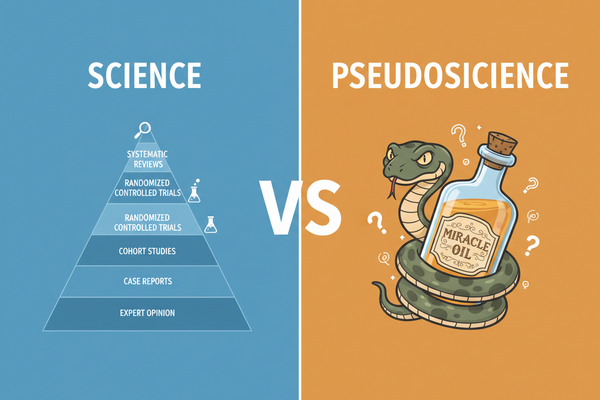
"All things are poisons. It is simply the dose that distinguishes between a poison and a remedy."
— Paracelsus
The Fine Line Between Help and Harm
If the quote feels a little dramatic, it’s because it is, and also because it’s true. Almost anything can help or harm depending on how much of it you take. It’s not just what you take that matters; it’s how much.
Think of it like coffee. One cup sharpens your focus. Six cups later, your heart is racing, your palms are sweaty, you’re jittery, and instead of focusing, your monkey brain swings from branch to branch.
Paracelsus: The Rebel Father of Toxicology
In the sixteenth century, a physician named Paracelsus staged what might be the most dramatic lecture in medical history.
At the University of Basel, he burned the works of giants like Galen and Avicenna in front of his students. It was less an act of vandalism than a declaration of independence. Stop trusting old books blindly, he seemed to say. Start paying attention to what actually works.
Behind the fire and spectacle was a simple, enduring idea. The dose makes the poison.
It is a sentence that has outlived empires, and for good reason. It captures something deeply human. We want to believe that things are either good or bad, safe or dangerous. Paracelsus insisted that reality is messier. And far more interesting.
The Legend of Mithridates VI
Long before Paracelsus, there was a king who took this idea to a rather extreme conclusion.
Mithridates VI, ruler of Pontus, lived in constant fear of assassination. His solution was unusual, even by royal standards. He consumed small amounts of poison every day, hoping to build immunity.
His personal blend, known as Mithridatium, reportedly included snake venom, arsenic, and other substances. While this is not exactly a recommended wellness routine, it illustrates a powerful truth: the same substance can be tolerated in small amounts and become deadly in large ones.

(Mithridates VI, Eric Gaba - Wikimedia Commons user: Sting)
History, however, has a sense of irony. When Mithridates was finally defeated by Pompey the Great, he attempted to end his life with poison. According to legend, it did not work. Years of careful dosing had made him resistant. In the end, he required a sword.
It is a story both tragic and oddly instructive. The same substance can protect or destroy. It depends on the dose.
When Even Water Turns Against Us

For a moment, set aside ancient kings and Renaissance physicians. Consider something far more familiar. Water.
In 2007, a radio contest held by KDND radio station challenged participants to drink as much water as possible without a bathroom break. One contestant, Jennifer Strange, took the challenge seriously. Too seriously.
She later died from water intoxication, a condition where excess water dilutes sodium levels in the blood, causing the brain to swell.
It is a story that feels almost impossible at first glance. Water, the symbol of health and purity, becoming lethal. Yet the body, like any finely tuned system, depends on balance. Even something essential can become dangerous when pushed too far.
“Stay hydrated” remains good advice. Just not as a competitive event.
Oxygen: Too Much of a Good Thing
Oxygen carries a similar paradox.
We depend on it every second. Without it, life ends in minutes. Yet in the mid-twentieth century, doctors learned a difficult lesson while trying to save premature infants.
High levels of oxygen, given with the best intentions, disrupted the normal development of blood vessels in the eye. The condition, known as retinopathy of prematurity, sometimes led to blindness.
The tragedy was not ignorance or neglect. It was excess.
Even life-saving treatments require restraint.
The Problem No One Talks About: Too Little
Underdosing rarely causes immediate harm. Instead, it produces something subtler. Nothing happens.
- A supplement taken at too low a dose shows no effect
- A medication fails quietly, without drama
- Effort is made, but results never arrive
It is like going to the gym once, lifting a light weight, and expecting transformation by morning. When people conclude that something “does not work,” the real issue is often that it was never given a fair chance.
Finding the "Goldilocks Zone"
So how do we find the balance?
Clinical studies exist for this very reason. Researchers test different doses to identify what works and what remains safe.
Think of it as a narrow comfort zone:
- Above the studied range: More side effects, not necessarily more benefit.
- Below the studied range: Lower effectiveness and likely disappointment.
The goal is not excess or restraint for its own sake. It is precision.

Biology Disagrees with "More is Better"
There is a certain appeal to the idea of doing more to get more.
But biology is not impressed by enthusiasm.
Take Vitamin C. The body absorbs only a limited amount at a time, roughly a few hundred milligrams. Beyond that, the excess is simply excreted.
The result is not improved health, but what might politely be called expensive urine.
It is a reminder that the body has its own rules. And it does not negotiate
From Guesswork to Evidence
The story, from Paracelsus to modern research, points in the same direction.
- The difference between help and harm is often dose.
- More is not automatically better.
- Less is not automatically safer.
- The right amount is usually discovered, not guessed.
In the end, dosage is not a minor detail tucked into fine-print. It is the difference between intention and outcome.
Getting it right may not be dramatic. It will not involve burning books or drinking poison. By following clinical research rather than intuition, we move away from guessing and toward results. Ultimately, the goal isn't "more" or "less"—it's getting it just right.
Reference
- https://www.nbcnews.com/id/wbna16614865
- https://www.ncbi.nlm.nih.gov/books/NBK594226/)
- https://www.ncbi.nlm.nih.gov/books/NBK225480/
Important Note
This article is intended for educational and informational purposes only. Statements regarding dietary supplements have not been evaluated by the Food and Drug Administration. Dietary supplements are not intended to diagnose, treat, cure, or prevent any disease.
Science-informed glaucoma supplement with 500 mg Nicotinamide & 120 mg Ginkgo Biloba. Be first to know when it's available.