The Survivor Tree
On August 6, 1945, at 8:15 AM, the U.S. B-29 bomber Enola Gay released the uranium-fueled bomb known as “Little Boy” over Hiroshima. In a matter of seconds, thousands of plants were incinerated. Yet, against all expectations, six ginkgo trees located within one to two kilometers of the blast survived.1
These trees are still alive today—silent witnesses to one of history’s most devastating moments. Their extraordinary endurance has earned Ginkgo biloba a lasting title: “The Survivor Tree.” One of them still stands in Shukkei-en Garden, rising with quiet majesty as a living testament to resilience and survival.

The Living Fossil
Ginkgo biloba is often called a “living fossil” because it has existed for more than 290 million years, survived K–T extinction with remarkably little evolutionary change.1 By comparison, even the mighty Tyrannosaurus rex, popularized in Jurassic Park, is a relative newcomer, appearing only about 60–70 million years ago.2

The Longevity Tree
The Ginkgo is also known as the “longevity tree” and for good reason. It can live for thousands of years, far outlasting most other plant species. Some of the oldest known specimens are truly remarkable. The Li Jiawan Grand Ginkgo King, located in Guizhou Province, China, is believed to be over 4,000 years old, standing as a living witness to centuries of history.3

Equally striking is the golden ginkgo tree at Gu Guanyin Buddhist Temple, which is estimated to be around 1,400 years old and draws visitors each autumn when its leaves turn a brilliant gold.1 These trees are not just botanical curiosities. They are enduring symbols of resilience, longevity, and the quiet strength of nature.

Over A Thousand Years of History
Ginkgo is deeply woven into human culture. In China, it has been cultivated, consumed, and revered for over a thousand years.
Often referred to as the “grandfather to grandson tree” (gongsun shu) because a tree planted by one generation would only bear fruit for the third generation, it served as a powerful symbol of longevity, endurance, and family continuity.4
As far back as the Song Dynasty (960 to 1279 AD), the ginkgo’s seeds, known as "silver almonds" or baiguo, became a staple of celebratory Chinese cuisine. These seeds were meticulously harvested, shelled, and toasted or boiled for use in symbolic dishes like "Buddha’s Delight", a vegetarian stew served during the Lunar New Year to represent purification and good fortune.
Compendium of Materia Medica
Long before ginkgo became the poster child for memory supplements, it had a very different purpose in traditional medicine.
In the 16th-century Compendium of Materia Medica (Bencao Gangmu), ginkgo wasn’t used to help you remember where you left your keys, it was used to help the body stop "leaking." As an astringent, its primary role was to "hold things in," acting as a functional stabilizer for a system losing too much fluid. Ginkgo was the go-to for chronic coughs, frequent urination, and digestive issues where the body was over-releasing fluids.5

Within the framework of Five Elements theory, ginkgo aligns with the Metal (Lung) and Water (Kidney) systems, which are responsible for breathing and fluid regulation. In plain terms, if the body was acting like a faulty faucet, ginkgo was there to turn the knob back to normal. 5
What is striking is how much this contrasts with modern use. Traditional texts make no mention of memory or cognitive enhancement; instead, ginkgo's reputation was built on regaining physical control when things were out of balance.
The Compendium also noted that the seeds could be slightly toxic if overused, emphasizing that even in the 1500s, proper preparation and moderation were key.
Traditional Medicine Westernized
The modernization of ginkgo as a therapeutic powerhouse was spearheaded by Dr. Willmar Schwabe III, a German pharmacist with a keen interest in botanical history and "living fossils."

While traditional Chinese medicine had spent centuries focused on the ginkgo seed for respiratory issues, Schwabe pivoted toward the leaf in the mid-1950s. He was fascinated by the tree's unique resilience to environmental stress. This likely raised a natural scientific question: Could the same compounds that protect the tree also protect human cells? This curiosity led to the moment ginkgo transitioned from a sacred temple tree to a subject of a pharmaceutical research.
Under Schwabe's direction, his lab spent decades refining the extraction process to create a standardized formula of flavonoids and terpenoids responsible for improving blood flow and antioxidant defense.
Active Compounds and Mechanism of Action
Modern research has identified two main groups of active compounds:
Terpenoids (6%): Circulation and Neuroprotection
Terpenoids in ginkgo are unique, specialized molecules known as ginkgolides and bilobalide that are found nowhere else in the plant kingdom. Terpenoids are the "engineers" of circulation and neuroprotection. Ginkgolides specifically inhibit Platelet-Activating Factor (PAF), a substance that causes blood to clot and blood vessels to constrict; by blocking PAF, these compounds improve circulation and reduce the "stickiness" of blood.7 Bilobalide, on the other hand, is believed to offer direct protection to the brain's mitochondria, helping neurons survive during periods of low oxygen or stress.8 Together, these terpenoids are responsible for the tree's reputation for enhancing microcirculation and preserving neuronal function.
Flavonoids (24%) – Antioxidant Defense
Flavonoids represent the largest group of bioactive compounds in ginkgo leaves, primarily consisting of flavones like quercetin, kaempferol, and isorhamnetin. These plant pigments function as potent antioxidants, patrolling the body to neutralize free radicals—unstable molecules that can cause oxidative stress and damage to cellular structures. By scavenging these harmful agents, flavonoids help protect delicate tissues, particularly those in the cardiovascular and nervous systems, from age-related decay and environmental stressors. Their presence is a major reason ginkgo is studied for its ability to support systemic health and mitigate inflammation.
Clinical Studies on Ginkgo Biloba6
Ginkgo biloba has been studied extensively in human clinical trials. A review article from the National Institutes of Health highlights the range of conditions for which Ginkgo biloba has been studied.
Indications:
- Dementia/ Cognitive Impairment: Evidence on the efficacy of Ginkgo biloba extract for the treatment or prevention of dementia and cognitive impairment remains mixed.
- Cardiovascular disease (CVD)/ Cardiovascular Risk Factors Reduction: There is no strong evidence that ginkgo prevents cardiovascular disease or hypertension. While it may offer modest improvements in neurological recovery after a stroke when used alongside aspirin, earlier systematic reviews found no significant benefit in terms of mortality or overall recovery.
- Psychiatric disorders: Early evidence suggests it may reduce symptoms of tardive dyskinesia in schizophrenia and improve outcomes when added to antidepressants for depression.
- Sexual Dysfunction: No more effective than a placebo for antidepressant-induced sexual dysfunction.
- Vertigo: Some trials show Ginkgo reduces the frequency and intensity of vertigo, performing similarly to betahistine but with better tolerance. More research is necessary.
- Tinnitus: Reviews consistently show ginkgo is ineffective for primary tinnitus.
- Vitiligo: One trial showed it significantly halted the progression of depigmentation. More quality research is warranted.
- Macular Degeneration: Two experiments demonstrated some beneficial effects of Ginkgo biloba on vision. More quality research is warranted.
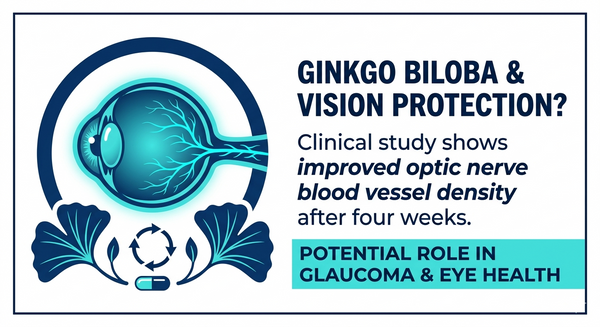
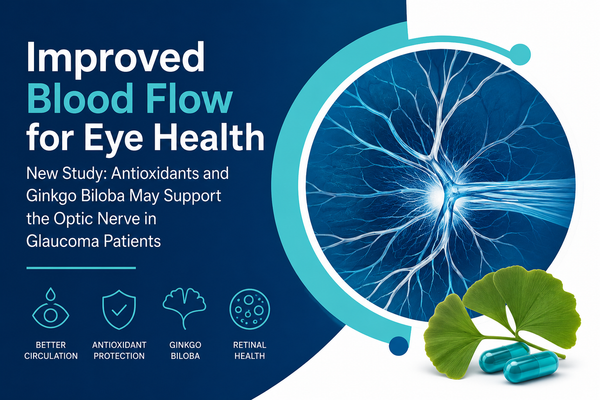
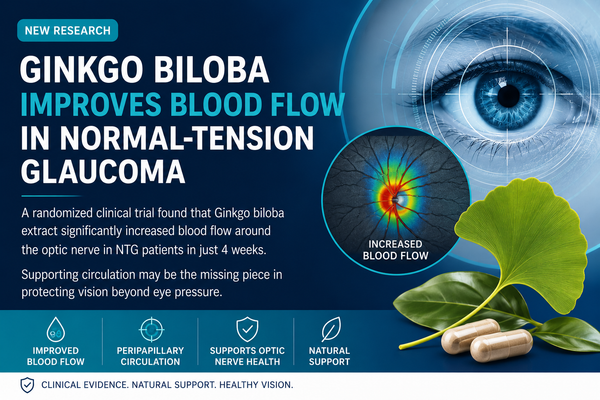
- Glaucoma: A 2019 systematic review suggested that flavonoids, often found in Ginkgo biloba, had a beneficial impact on glaucoma, particularly in terms of increasing ocular blood flow and potentially halting the progression of visual field loss. More quality research is warranted.
- Altitude Sickness: Systematic reviews conclude that ginkgo is not effective at preventing acute mountain sickness.
Ginkgo Biloba Dosage Used in Studies 6
Ginkgo biloba extract administration is via the oral route. Most ginkgo extract is standardized to include 6% terpenoids and 24% flavonoid glycosides. Typical dosages include:
- 120 mg per day
- Up to 240 mg per day
These are usually divided into two or three doses daily.
Higher doses have been tested, but research generally does not show proportional benefits with increasing dosage.
Safety and Toxicology6
Ginkgo biloba is generally considered safe and well-tolerated when consumed at the recommended maximum dose of 240 mg per day. Common mild side effects include headaches, heart palpitations, gastrointestinal upset, and allergic skin reactions. However, significant safety concerns exist regarding its impact on blood coagulation; case reports have linked ginkgo use with bleeding events, especially when combined with anticoagulants, antiplatelets, or NSAIDs. Additionally, clinicians advise caution for patients with seizure disorders, as "ginkgo toxins" found in the plant can lower the seizure threshold.6
Conclusion
Ginkgo biloba sits at a remarkable intersection of history and science. One of the oldest surviving tree species on Earth, it has endured everything from K-T extinction to the devastation of Hiroshima. Its journey, from ancient temple courtyards to contemporary laboratories, reflects our enduring fascination with its incredible resilience.
Today, research suggests that ginkgo may offer modest benefits, particularly in circulation and cognitive support, with ongoing studies exploring its role in eye health and other areas. However, its effects are often subtle rather than dramatic, working through multiple pathways and depending on consistent use and proper formulation.
In many ways, the story of ginkgo is only just beginning. Despite centuries of traditional use and decades of scientific study, there is still much to learn about how its complex compounds interact with the human body. As research continues to evolve, ginkgo remains not only a symbol of the past, but a subject of discovery for the future.
References
2. https://www.fieldmuseum.org/blog/sue-t-rex
3. https://www.atlasobscura.com/places/li-jiawan-grand-ginkgo-king
4.https://www.chinadaily.com.cn/a/201705/12/WS5a29220ea310fcb6fafd3d76.html#:~:text=It%20takes%20three%20generations%20for%20the%20ginkgo,call%20it%20gongsun%20shu%2C%20the%20grandfather%2Dgrandchild%20tree.
5. Bensky, Clavey & Stöger – Chinese Herbal Medicine: Materia Medica (3rd ed.)
6. https://www.ncbi.nlm.nih.gov/books/NBK541024/
7. Braquet P, Hosford D. Ethnopharmacology and the development of natural PAF antagonists as therapeutic agents. J Ethnopharmacol. 1991 Apr;32(1-3):135-9. doi: 10.1016/0378-8741(91)90111-p. PMID: 1881152.
8. Ahlemeyer B, Krieglstein J. Neuroprotective effects of Ginkgo biloba extract. Cell Mol Life Sci. 2003 Sep;60(9):1779-92. doi: 10.1007/s00018-003-3080-1. PMID: 14523543; PMCID: PMC11146048.
Important Note
This article is intended for educational and informational purposes only. Statements regarding dietary supplements have not been evaluated by the Food and Drug Administration. Dietary supplements are not intended to diagnose, treat, cure, or prevent any disease.
Science-informed glaucoma supplement with 500 mg Nicotinamide & 120 mg Ginkgo Biloba. Be first to know when it's available.