The Dogs That Changed Vitamin Science
The dogs were clearly unwell. They had poor appetite, weakness, and a distinctive dark discoloration of the tongue, a condition researchers called black tongue disease. At the time, the illness strongly resembled an infection. It appeared contagious, showed inflammatory symptoms, and behaved in ways that led many to suspect a microbial cause.
Yet repeated investigations failed to identify any infectious agent. No bacteria, no virus, and no clear toxin could explain the condition. What remained was a puzzling disease that resisted the dominant thinking of the time.
In the 1930s, Conrad Elvehjem approached the problem from a different angle. Instead of searching for a pathogen, he tested whether a nutritional deficiency might be responsible. He fed affected dogs a liver extract, a food known to be rich in essential nutrients.

The response was rapid and decisive. The animals recovered, their appetite returned, and the characteristic tongue lesions began to resolve. Further work isolated the active factor in the liver extract, which was identified as niacin, also known as vitamin B3.
What had seemed like a complex infectious disease turned out to be a deficiency of a single nutrient.1 It was a simple answer, but one that would reshape how scientists understood the relationship between diet and disease.
Pellagra and the Hidden Cost of Poor Diet
Once niacin deficiency was identified in animals, the human story became unavoidable.
Pellagra, the human equivalent of black tongue disease, affected millions in the American South between 1906 and the 1930s. More than 3 million people were impacted at its peak. The cause was not infection or poison, but a diet heavily based on untreated corn, which provided niacin in a form the body could not easily use.2

The disease was famously described by the “4 Ds”:
- Dermatitis
- Diarrhea
- Dementia
- Death
The solution was not complicated. It was diet diversification and food fortification. Once niacin became accessible in the diet, a devastating disease quietly disappeared.
A rare moment in medicine followed. No new drug. No high tech intervention. Just understanding what nutrient was missing.
Why Niacin Is Essential to Life
Niacin is the building material for NAD⁺, a molecule every cell depends on. NAD⁺ is involved in:
- Converting food into energy
- Repairing DNA damage
- Controlling oxidative stress
- Supporting cell survival under stress3
Without NAD⁺, cells do not gradually weaken. They fail.
The Many Names of Niacin
Time for a short dive into biochemistry. A cup of coffee may help here, because what follows can feel like a tangle of similar-sounding names that actually mean different things.
Niacin is not one molecule. It is a family name that gets used a bit too casually.
Sometimes it refers specifically to nicotinic acid. Other times it includes a broader group of related compounds such as nicotinamide, nicotinamide riboside, nicotinamide mononucleotide, and even NAD⁺ itself. To keep things clear in this article, Niacin refers to the vitamin B3 family.
This matters because different forms behave very differently in the body. Same family name. Very different personalities.
Niacin Found in Food and the Body
The primary dietary forms of niacin are:
- Nicotinic acid
- Nicotinamide (niacinamide)
Inside the body, niacin is transformed into:
- NAD⁺ (nicotinamide adenine dinucleotide)
- NADP⁺ (nicotinamide adenine dinucleotide phosphate)
These are not storage forms. They are active working molecules that help enzymes carry out life sustaining reactions.3
Food Sources Are Not All Equal
Different foods supply niacin in different chemical forms, and this distinction matters.
- Animal-based foods, such as meat, poultry, fish, and especially liver, provide niacin in highly bioavailable forms, including free nicotinic acid and coenzyme-bound NAD⁺ and NADP⁺. During digestion, NAD⁺ and NADP⁺ coenzymes are broken down into nicotinamide, which is readily absorbed.3
- Dairy products and eggs tend to provide forms closer to nicotinamide itself, making them efficient contributors to the body’s usable pool.3
- Plant-based sources such as grains and legumes often contain niacin in a bound form. In cereals like corn, this binding can significantly limit absorption unless the food is properly processed. Thus, while niacin may be present, its bioavailability, meaning the body’s ability to access and use it, varies widely, causing the Pellagra epidemic in American South.2,3
How the Body Converts Niacin into NAD⁺
The conversion of dietary niacin into these active forms occurs largely in the liver, which serves as a primary metabolic hub. However, this process is not confined to a single organ. Most tissues in the body possess the enzymatic machinery needed to generate NAD⁺ locally, reflecting the universal demand for this coenzyme. Two main biochemical routes are involved: the Preiss–Handler pathway, which converts nicotinic acid into NAD⁺, and the salvage pathway, which recycles nicotinamide back into NAD⁺.
Preiss–Handler Pathway (from nicotinic acid)3
Nicotinic acid → NaMN → NaAD → NAD+
In this pathway:
· Nicotinic acid is converted into nicotinic acid mononucleotide (NaMN)
· NaMN is converted into nicotinic acid adenine dinucleotide (NaAD)
· NaAD is then converted into NAD⁺
Salvage Pathway (from nicotinamide)3
Nicotinamide → NMN → NAD+
In this pathway:
· Nicotinamide is converted into nicotinamide mononucleotide (NMN)
· NMN is then converted into NAD⁺
In fact, the salvage pathway is the dominant mechanism in humans. Every time NAD⁺ participates in a reaction, whether in energy metabolism or DNA repair, it is broken down and releases nicotinamide. Rather than being discarded, this nicotinamide is efficiently recycled back into NAD⁺. This recycling occurs in virtually all cells, particularly in metabolically active tissues such as the liver, muscle, retinal ganglion cells and brain. In this sense, nicotinamide behaves less like a consumable nutrient and more like a reusable component in a tightly regulated system.
A Backup Route: Making Niacin from Tryptophan3
The body also has a fallback option. It can convert tryptophan, an essential amino acid from protein, into niacin.
However, this is inefficient. Roughly 60 mg of tryptophan is needed to produce just 1 mg of niacin equivalent. It also depends on other nutrients like vitamin B6. This is a backup system, not a main supply line.
NAD⁺-boosting Supplements
There are many commercial vitamin B3–related compounds marketed as NAD⁺-boosting products, but they are not all the same. They all aim to raise NAD+, yet they take different routes in the body, which affects how fast they work, what side effects they cause, or how much they cost.
- Nicotinic Acid (classic niacin): This is the oldest and most studied form. It raises NAD⁺ through a longer pathway (Preiss–Handler), meaning it starts earlier in the “production line.” It is effective but often causes skin flushing—a warm, red sensation due to widened blood vessels. It also typically requires higher doses. Think of it as a reliable but uncomfortable road to the same destination.
- Nicotinamide (niacinamide / NAM): This form avoids flushing and works through the body’s recycling system (salvage pathway). However, it depends on a key enzyme (NAMPT) that acts like a bottleneck, slowing conversion. Still, it is affordable and widely used, making it a practical baseline option.
- Nicotinamide Riboside (NR): A newer form that enters the pathway further downstream, bypassing the main bottleneck. This allows for a faster and more efficient rise in NAD⁺ levels in many cases. It behaves like an express lane, reaching the same endpoint with fewer delays, though at a higher cost.
- Nicotinamide Mononucleotide (NMN): Even closer to NAD⁺ than NR, requiring just one final step for conversion. This makes it one of the most direct precursors available. In the factory analogy, NMN is almost the finished product, which is why it is often marketed as a premium option.
- Direct NAD+ supplementation: At first glance, taking NAD⁺ directly sounds like the most logical approach. However, this is where the biology doesn’t cooperate. Oral NAD⁺ has low bioavailability (around ~10%), meaning most of it is broken down in the gut into nicotinamide before absorption. In other words, your body ends up treating it similarly to taking nicotinamide anyway. Given that NAD⁺ supplements are often 3-5× more expensive, this makes them a less efficient and less cost-effective choice. It’s like buying a finished product that gets disassembled before use—you are paying more without gaining a real advantage.3
Choosing Between NAD⁺ Precursors: What Actually Matters
Given the available options, some vitamin B3–related compounds act faster, some slower, some cause flushing while others do not, and some are significantly more expensive. At first glance, this can make selection seem like a technical comparison of speed or convenience. However, the more important point is that the goal of supplementation is not simply to increase NAD+ levels, but to achieve specific health outcomes associated with it. Therefore, the best way to choose is to look at human clinical studies.
Same Niacin Family, Different Effects
Even though these compounds are closely related, they do not behave the same in the body.
For example, in studies on abnormal blood lipids (dyslipidemia):
- Nicotinic Acid (niacin)
o Raises HDL (“good cholesterol”)
o Lowers LDL (“bad cholesterol”)
o Lowers triglycerides
o Has clear clinical effects on cholesterol
- Nicotinamide (niacinamide)
o Does not improve cholesterol or triglycerides in a meaningful way
This shows that even within the same vitamin family, the effects can be very different.3
Simple Rule: Evidence-based Supplementation
- Do not choose based only on speed, flushing, or price.
- Do not assume all NAD⁺ boosters do the same thing.
- Choose based on what has been proven in human studies for the outcome you want.
Clinical Uses of Niacin (Disease, Key Finding, Molecule Used, Dosage)
| Condition / Indication | Key Clinical Finding | Primary Niacin Molecule Used | Dosage Range |
|
Dyslipidemia3 (High cholesterol / triglycerides) |
Improves cholesterol profile by raising HDL ("good cholesterol") and lowering LDL ("bad cholesterol") and triglycerides. | Nicotinic acid | 1,000–3,000 mg/day |
| Atherosclerotic Cardiovascular Disease3 (Secondary prevention) | Older studies showed fewer repeat heart attacks, but newer studies (with statins) show limited added benefit. | Nicotinic acid | 1,000–2,000 mg/day |
| Coronary Artery Disease3 | Helps improve lipid levels, but does not consistently reduce death rates in modern treatment settings. | Nicotinic acid | 1,000–2,000 mg/day |
| Type 2 Diabetes Mellitus3 | Improves cholesterol levels but may raise blood sugar in some patients. | Nicotinic acid | 500–2,000 mg/day |
| Metabolic Syndrome3 | Improves HDL and triglycerides, but overall heart benefit remains unclear. | Nicotinic acid | 1,000–2,000 mg/day |
| Alzheimer’s Disease / Cognitive Decline4 | Supports brain cell energy production (via NAD⁺), but evidence is still early. | Nicotinamide | 3,000 mg/day |
| Parkinson’s Disease / Neurodegenerative Disorders5 | Focuses on improving mitochondrial (cell energy) function rather than cholesterol. | Nicotinamide riboside | 3,000 mg/day |
| Schizophrenia and Psychiatric Conditions6 | Used historically to study the “niacin flush response” rather than as a main treatment. | Nicotinic acid | Variable; often single test doses (50–500 mg) |
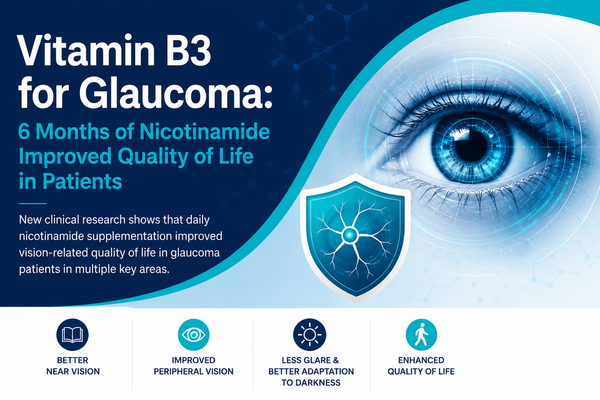
| Glaucoma / Retinal Neuroprotection7 | Aims to protect optic nerve cells by improving cellular energy supply. Early human data is promising but not definitive. | Nicotinamide | 500–3,000 mg/day |
| Chronic Kidney Disease8 (Hyperphosphatemia) | May help lower phosphate levels, but results are inconsistent. | Nicotinic acid | 500–1,500 mg/day |
| Skin Conditions9 (Acne, Inflammation, Skin Cancer Prevention) | Reduces inflammation and helps repair DNA damage in skin cells; strongest evidence in preventing certain skin cancers in high-risk groups. | Nicotinamide | 500–1,000 mg/day |
| Cancer10 (Adjunct / Experimental) | Studied for its role in DNA repair and stress response, but no proven treatment role yet. | Nicotinamide | 500–3,000 mg/day (research settings) |
| Aging and Cellular Energy Decline11 (NAD⁺ Biology) | Supports cellular energy and repair systems; most modern research focuses on NAD⁺ recycling pathways. | Both Nicotinic acid and Nicotinamide | 250–1,000 mg/day (varies widely) |
Conclusion
The story of niacin begins with a simple observation—sick dogs recovering after being fed liver—but it ultimately reveals something much deeper about human health. What first appeared to be a mysterious disease turned out to be a basic nutritional gap, reminding us that some of the most powerful interventions in medicine are not complex, but fundamental. From preventing pellagra to supporting cellular energy through NAD⁺, niacin plays a quiet yet essential role in keeping cells alive and functioning.
At the same time, this simplicity can be misleading. Not all forms of niacin behave the same, and more is not always better. Nicotinic acid, nicotinamide, and newer NAD⁺ precursors each take different paths in the body, leading to different benefits, limitations, and risks. Understanding these differences is what turns niacin from a generic vitamin into a targeted tool. Whether the goal is improving cholesterol, supporting brain and eye health, or maintaining cellular resilience, the key is not just taking niacin, but choosing the right form at the right dose, guided by evidence rather than assumption.
References
- Elvehjem CA et al., 1937; Carpenter KJ, 2000; NIH ODS
- Schmitz S, Lowenstein EJ. The unwavering doctor who unraveled a medical mystery. Int J Womens Dermatol. 2018 Oct 17;5(2):137-139. doi: 10.1016/j.ijwd.2018.09.001. PMID: 30997391; PMCID: PMC6451741.
- https://ods.od.nih.gov/factsheets/Niacin-HealthProfessional/
- Ketron GL, Grun F, Grill JD, Feldman HH, Rissman RA, Brewer GJ. Pharmacokinetic and pharmacodynamic assessment of oral nicotinamide in the NEAT clinical trial for early Alzheimer's disease. Alzheimers Res Ther. 2025 Mar 11;17(1):59. doi: 10.1186/s13195-025-01693-y. PMID: 40069789; PMCID: PMC11895359.
- Berven H, Kverneng S, Sheard E, Søgnen M, Af Geijerstam SA, Haugarvoll K, Skeie GO, Dölle C, Tzoulis C. NR-SAFE: a randomized, double-blind safety trial of high dose nicotinamide riboside in Parkinson's disease. Nat Commun. 2023 Nov 28;14(1):7793. doi: 10.1038/s41467-023-43514-6. PMID: 38016950; PMCID: PMC10684646.
- Vallely JF, Lovegrove TD, Hobbs GE. Nicotinic acid and nicotinamide in the treatment of chronic schizophrenia. Can Psychiatr Assoc J. 1971 Oct;16(5):433-5. doi: 10.1177/070674377101600508. PMID: 4261335.
- Nicola CA, Marinescu MC, Firan AM, Tartea G, Naidin MS, Ciuluvica RC, Dimulescu MD, Voicu NM, Mihailescu CM, Meca AD, Bogdan M, Turcu-Stiolica A. Changes in Quality of Life Among Glaucoma Patients Following Six Months of Niacinamide Supplementation. Nutrients. 2025 Aug 27;17(17):2775. doi: 10.3390/nu17172775. PMID: 40944166; PMCID: PMC12430027.
- Shoji M, Kato H, Koshizaka M, Kaneko H, Baba Y, Ishikawa T, Teramoto N, Kinoshita D, Yamaguchi A, Maeda Y, Inaba Y, Shiko Y, Ozawa Y, Bohr VA, Maezawa Y, Yokote K. Nicotinamide Riboside Supplementation Benefits in Patients With Werner Syndrome: A Double-Blind Randomized Crossover Placebo-Controlled Trial. Aging Cell. 2025 Aug;24(8):e70093. doi: 10.1111/acel.70093. Epub 2025 Jun 3. PMID: 40459998; PMCID: PMC12341770.
- Chen AC, Martin AJ, Choy B, Fernández-Peñas P, Dalziell RA, McKenzie CA, Scolyer RA, Dhillon HM, Vardy JL, Kricker A, St George G, Chinniah N, Halliday GM, Damian DL. A Phase 3 Randomized Trial of Nicotinamide for Skin-Cancer Chemoprevention. N Engl J Med. 2015 Oct 22;373(17):1618-26. doi: 10.1056/NEJMoa1506197. PMID: 26488693.
- Nikas IP, Paschou SA, Ryu HS. The Role of Nicotinamide in Cancer Chemoprevention and Therapy. Biomolecules. 2020 Mar 20;10(3):477. doi: 10.3390/biom10030477. PMID: 32245130; PMCID: PMC7175378
- Noreen S, Lim SS, Lee D. Preventive and Protective Effects of Nicotinamide Adenine Dinucleotide Boosters in Aging and Retinal Diseases. Int J Mol Sci. 2025 Nov 11;26(22):10923. doi: 10.3390/ijms262210923. PMID: 41303405; PMCID: PMC12652405.
Important Note
This article is intended for educational and informational purposes only. Statements regarding dietary supplements have not been evaluated by the Food and Drug Administration. Dietary supplements are not intended to diagnose, treat, cure, or prevent any disease.
Science-informed glaucoma supplement with 500 mg Nicotinamide & 120 mg Ginkgo Biloba. Be first to know when it's available.